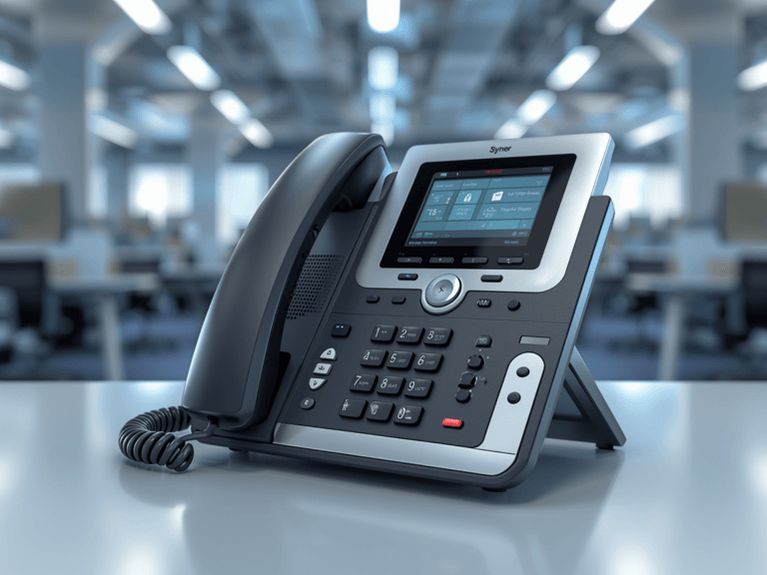
Modern business communications has evolved far beyond traditional landlines. Today, companies need flexible, scalable, and cost-effective systems like SIP lines for business to support remote work, global collaboration, and omnichannel customer interactions.
That is where SIP lines come in.
SIP lines enable businesses to make voice calls, video calls, instant messaging, and multimedia communications over the internet instead of relying on outdated phone infrastructure.
In this guide, you’ll learn:
- What SIP lines are
- How SIP lines work
- The difference between SIP lines and SIP trunks
- Key benefits of SIP trunking
- Common drawbacks and challenges
- How SIP phone systems support modern businesses
What Is a SIP Line?
A SIP line is a virtual phone line that uses the internet to transmit voice and communication data instead of traditional telephone wiring.
SIP stands for Session Initiation Protocol, a communication protocol that establishes and manages real-time communication sessions across IP networks.
Unlike traditional analog phone lines, SIP lines operate through cloud-based infrastructure, enabling businesses to communicate from virtually anywhere.
What Can SIP Lines Support?
SIP lines support multiple communications methods, including:
- Voice calls
- Video conferencing
- Instant messaging
- Multimedia file sharing
- Unified communications workflows
Each SIP line typically supports one active call session at a time.
Businesses that handle higher call volumes can add additional SIP lines based on their operational needs.
How Do SIP Lines Work?
SIP lines work by connecting business phone systems to the internet through SIP trunking technology.
Instead of routing calls through physical copper telephone lines, SIP converts voice signals into digital packets and transmits them over IP networks.
The Basic SIP Call Flow
1. A User Initiates a Call
The communications session begins from a SIP-enabled device or business phone system.
2. The SIP Protocol Establishes the Session
SIP handles:
- Call setup
- Session management
- Connection routing
- Call termination
3. Voice Data Travels Over the Internet
The audio is transmitted digitally through the cloud instead of traditional PSTN infrastructure.
4. The Recipient Receives the Call
The system routes the communication to the recipient’s device, regardless of location.
What Is the Difference Between SIP Lines and SIP Trunks?
SIP lines and SIP trunks are closely related, but they are not the same thing.
What Is a SIP Trunk?
A SIP trunk is the virtual connection between your business phone system and the internet.
It acts as the central communications channel that carries multiple SIP lines simultaneously.
SIP Line vs SIP Trunk
| SIP Line | SIP Trunk |
| Supports one active call session | Supports multiple SIP lines |
| Individual communications channel | Main connection infrastructure |
| Used for a single call | Handles overall call traffic |
| Scales per user or call volume | Scales entire communications system |
Think of a SIP trunk as the highway and SIP lines as the lanes carrying conversations.
How Does SIP Trunking Work With PBX Systems?
SIP trunking connects your business PBX system to internet-based communications.
PBX stands for Private Branch Exchange, which is the internal phone system businesses use to manage communications.
Traditional PBX systems relied on physical phone lines. SIP trunking modernizes this setup by replacing those lines with cloud-based connectivity.
Benefits of SIP-Enabled PBX Systems
Businesses can:
- Make local and international calls online
- Scale communications capacity easily
- Reduce infrastructure costs
- Support remote and hybrid employees
- Access advanced cloud calling features
What Are the Benefits of SIP Trunking for Businesses?
SIP trunking offers major operational, financial, and scalability advantages for modern organizations.
1. Lower Communications Costs
Traditional phone systems often involve:
- Expensive hardware
- Separate voice infrastructure
- High international calling costs
- Ongoing maintenance expenses
SIP trunking reduces these costs by using internet-based communications instead of physical phone networks.
Many providers offer predictable monthly pricing models, making communications expenses easier to manage.
2. Scalability and Flexibility
SIP systems scale much faster than traditional phone infrastructure.
Businesses can:
- Add new users instantly
- Increase call capacity
- Expand to new locations
- Support seasonal growth
Without installing physical phone lines.
3. Support for Remote and Hybrid Work
Because SIP systems operate through the cloud, employees can communicate from anywhere using:
- Desktop apps
- Mobile devices
- VoIP phones
- Softphones
This flexibility supports remote teams and distributed workforces.
4. Unified Communications
SIP trunking combines multiple communication channels into one system, including:
- Voice calls
- Video meetings
- Messaging
- File sharing
This creates a more connected and collaborative workplace.
5. Improved Call Quality
Modern SIP providers prioritize:
- HD voice quality
- Low latency
- Reliable uptime
- Stable connectivity
When supported by strong internet bandwidth, SIP systems deliver significantly better call experiences than legacy infrastructure.
6. Easier System Management
SIP systems are designed to be user-friendly and centrally managed through cloud dashboards.
Businesses can easily:
- Adjust settings
- Add users
- Monitor analytics
- Configure call routing
- Manage remote teams
Without complex on-premise maintenance.
How SIP Lines Improve Business Productivity
Communications delays and disconnected systems often reduce employee productivity.
SIP phone systems improve workflows by enabling:
- Faster internal communication
- Better collaboration across locations
- Seamless remote accessibility
- Reduced downtime
- Faster customer response times
Employees spend less time troubleshooting communications issues and more time focusing on customers and business operations.
What Are the Challenges of SIP Trunking?
While SIP trunking offers major advantages, businesses should also understand potential implementation challenges.
Internet Bandwidth Requirements
SIP systems depend heavily on stable internet connectivity.
Poor bandwidth can cause:
- Call drops
- Audio delays
- Echo issues
- Reduced voice quality
Businesses should ensure sufficient bandwidth capacity before deployment.
Compatibility With Existing Systems
Older phone hardware may not fully support SIP technology.
Some organizations may need:
- SIP-compatible devices
- VoIP gateways
- Cloud PBX upgrades
- Network optimization
A reliable provider can help businesses transition smoothly.
Security Considerations
Like any internet-based technology, SIP systems require strong security protections.
Businesses should implement:
- Encryption
- Secure authentication
- Firewalls
- Fraud monitoring
- Compliance controls
To protect communications and customer data.
What Features Should Businesses Look for in a SIP Provider?
Choosing the right SIP provider is critical for performance, reliability, and scalability.
Key Features to Evaluate
Cloud PBX Integration
Supports modern business phone system functionality.
Call Routing and IVR
Improves customer experience and call handling efficiency.
Analytics and Reporting
Provides visibility into communications performance.
CRM Integrations
Connects communications workflows with customer data platforms.
Mobile and Remote Support
Ensures flexibility for distributed teams.
Reliability and Uptime
Look for enterprise-grade service availability and redundancy.
How SIP Trunking Supports Modern Contact Centers
SIP trunking plays a major role in modern cloud contact centers by enabling scalable and flexible communications infrastructure.
Businesses can use SIP systems to support:
- Inbound and outbound calling
- AI-powered voice systems
- Omnichannel customer service
- Remote call center agents
- Real-time analytics and monitoring
As customer communications become increasingly digital, SIP infrastructure provides the flexibility businesses need to scale efficiently.
Frequently Asked Questions About SIP Lines
Are SIP lines reliable?
Yes, SIP lines are highly reliable when supported by strong internet connectivity and a trusted provider.
Modern cloud communications platforms include redundancy and failover protections to maximize uptime.
How many SIP lines does a business need?
The number of SIP lines depends on how many simultaneous calls your business handles at once.
Higher call volume businesses require more SIP channels.
Can SIP lines support remote employees?
Yes, SIP systems are ideal for remote and hybrid work environments because they operate through internet-based infrastructure.
Are SIP lines cheaper than traditional phone lines?
In most cases, yes. SIP trunking typically reduces hardware, maintenance, and long-distance calling costs.
Do SIP lines require special phones?
Businesses can use SIP-compatible desk phones, softphones, or mobile applications.
How Platforms Like Ultatel Support SIP Communications
Platforms like Ultatel provide cloud-based SIP trunking and business communications solutions designed for modern organizations.
Capabilities typically include:
- SIP trunking services
- Cloud PBX systems
- AI-powered communications tools
- CRM integrations
- Call analytics and reporting
- Omnichannel communications support
- Remote workforce enablement
By combining SIP technology with cloud communications infrastructure, businesses can modernize operations while improving scalability and customer experience.
Conclusion
SIP lines have transformed business communications by replacing traditional phone infrastructure with flexible, internet-based communications systems.
Through SIP trunking, businesses can reduce costs, improve scalability, support remote work, and unify communications across voice, video, and messaging channels.
For modern organizations looking to scale efficiently and improve communications reliability, SIP phone systems are no longer optional—they are a critical part of digital business operations.
